A Deep Dive Into the Industry’s Most Comprehensive Assessment of Exchange Risk, Transparency, and Operational Resilience
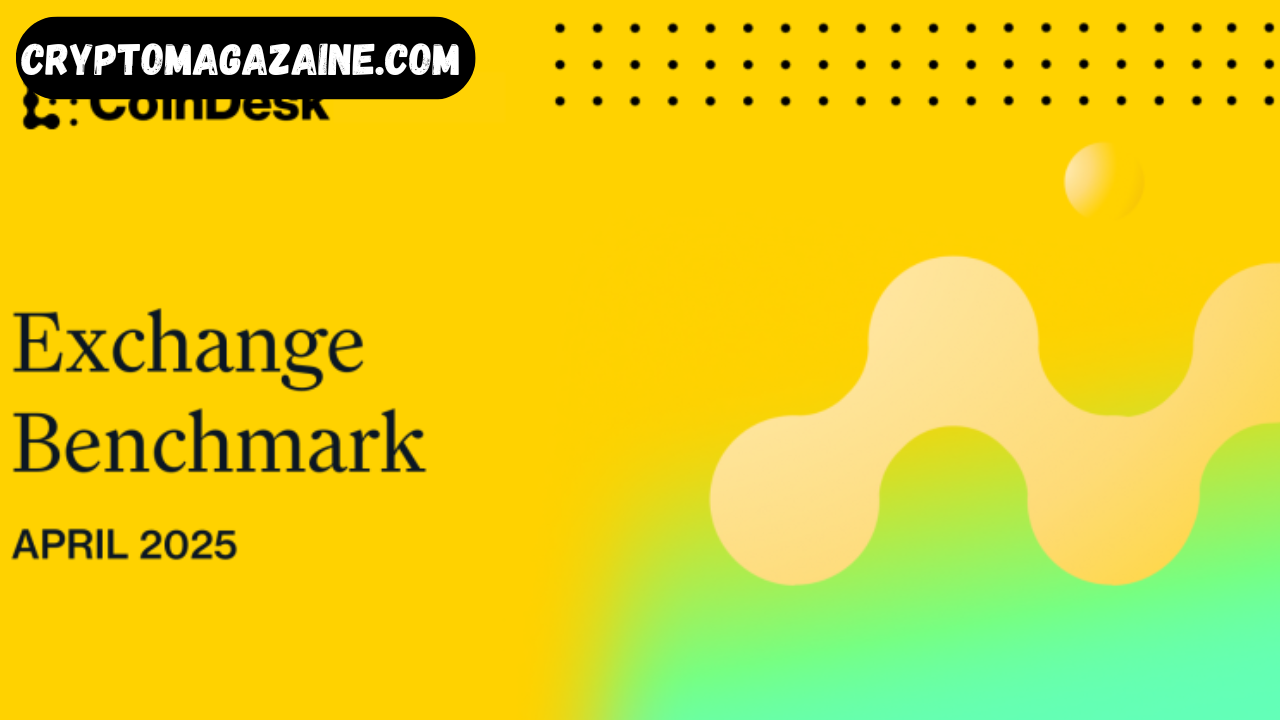
The global digital asset marketplace has entered a new era of maturity — and with it comes a renewed focus on trust. In an industry shaped by volatility, competition, and the constant race toward regulatory clarity, CoinDesk’s Exchange Benchmark has long stood as one of the clearest barometers of exchange reliability. Now in its November 2025 edition, the benchmark once again delivers an in-depth, data-driven evaluation of how the world’s most influential digital asset marketplaces are performing.
Introduced in 2019 and refined each year since, the Exchange Benchmark blends qualitative and quantitative measures across more than 200 distinct metrics, offering a panoramic assessment of how exchanges operate, govern, protect customers, and respond to emerging challenges. These scores directly feed into CoinDesk Indices’ exchange eligibility framework, which shapes inclusion in benchmark reference rates across the crypto investment ecosystem. In other words, these rankings don’t just offer an academic snapshot — they influence market participation, investor confidence, and institutional flows.
This cycle evaluated 81 exchanges, including 79 spot platforms and 29 derivatives venues, ultimately assigning grades on a rigorous scale from AA to F. Exchanges receiving AA through BB designations return to the elite category of “Top-Tier,” a classification reflecting sound compliance, high-quality liquidity, robust governance practices, and a strong operational foundation.
The November 2025 benchmark comes at a time of global regulatory overhauls, shifting liquidity landscapes, rising security expectations, and new demands for transparency. What emerges is a portrait of an industry that is maturing rapidly — yet still undergoing complex, global realignments.
Binance, Bitstamp, and Coinbase Take the Lead
At the top of the rankings sits Binance, once again securing its position as the highest-rated exchange with an exceptional 93.4 (AA). It is notably the only platform to break above the 90-point threshold in this edition. Despite ongoing scrutiny in various jurisdictions, Binance’s improvements in governance practices, expanded compliance infrastructure, and enhanced Proof-of-Reserves reporting contributed to its standout performance.
Following Binance, Bitstamp claims second place with a score of 89.3, reaffirming its status as one of the most reliable and longest-operating exchanges globally. Bitstamp’s deep regulatory footprint and consistently strong financial transparency metrics remain its defining strengths.
Coinbase comes in third with 88.0, supported by its broad regulatory licenses, secure infrastructure, and increasingly global liquidity presence. Both Kraken and Crypto.com complete the top five with scores of 87.0, showcasing the fierce competition among established U.S. and Asia-Pacific players.
The top of the rankings underscores a central theme of the 2025 benchmark: the highest-quality exchanges have gotten even better, refining processes that had already been industry-leading.
Top-Tier Exchanges Expand Despite Stricter Standards
One of the most striking findings of the November 2025 benchmark is that the number of Top-Tier exchanges — those scoring AA to BB — has grown to 20, compared with 19 in the previous cycle. This increase comes despite stricter scoring thresholds, a sign that competition at the top is intensifying and that the sector overall is evolving toward higher operational maturity.
Additionally, eight exchanges achieved an AA rating, the highest number since the benchmark’s inception in 2019. The expansion of the AA cohort reflects a shift: exchanges are moving beyond bare-minimum compliance and increasingly adopting institutional-grade practices.
This growing class of upper-tier exchanges indicates improved governance structures, enhanced third-party audits, more sophisticated custody architectures, and greater willingness to adopt regulatory standards even in regions where formal requirements remain ambiguous.
Market Concentration Shifts as Mid-Tier Exchanges Gain Ground
Perhaps the most unexpected development in this cycle is the shift in global trading concentration. Historically, Top-Tier exchanges have dominated global market volume. However, the November 2025 data reveals that these elite venues now account for 42% of global spot volume, down sharply from 60% in April.
This decline is not necessarily a sign of weakening performance among Top-Tier platforms. Instead, it reflects a notable rise in trading activity across mid-tier exchanges, driven by:
- the geographic fragmentation of liquidity,
- the emergence of region-specific platforms,
- evolving regulatory incentives,
- niche asset coverage not offered by major exchanges,
- and sophisticated market-maker expansion into smaller venues.
The result is a more distributed and competitive global exchange environment, one where liquidity is no longer concentrated among just a handful of major players. For market participants, this shift calls for enhanced due diligence as more platforms compete for trading flows.
Regulatory Power Shifts Toward the U.S.
Regulation remains one of the most decisive forces shaping the exchange landscape, and this edition of the benchmark highlights a clear trend: North America has overtaken Europe in licensing leadership.
A striking detail reveals that EU registrations declined 33% during the review period. While the European Union’s MiCA (Markets in Crypto-Assets) regulatory framework has sparked global interest, the transition into MiCA-compliant operations has not been uniform. Some platforms withdrew, some consolidated, and others sought licenses in more favorable jurisdictions.
Still, 16 exchanges have now received full MiCA authorisation, marking a milestone for European regulatory cohesion — though one that fewer platforms currently meet than expected.
In contrast, U.S. exchanges strengthened their licensing footprint despite the country’s complex regulatory landscape. North America’s growing dominance reflects:
- strengthened state-level licensing frameworks,
- a more mature enforcement environment,
- heightened investor trust in audited financial reporting,
- and increased institutional participation.
Regulation is no longer a passive factor; it is actively redistributing global competitive advantage.
Security Strengthens Amid Losses

Cybersecurity remains the Achilles’ heel of the digital asset industry, but the November 2025 benchmark delivers a cautiously optimistic picture. The period recorded $62 million in losses from hacks, a non-trivial figure but significantly lower than multi-hundred-million breaches seen in earlier years.
More importantly, none of the Top-Tier exchanges experienced extended downtime, a critical indicator of operational resilience. Rapid incident response, redundant infrastructure, and maturing DevSecOps practices appear to be paying off.
Another encouraging sign: bug bounty rewards rose across all exchange cohorts, demonstrating a shift toward proactive security engagement. Exchanges are increasingly incentivizing external researchers to uncover vulnerabilities before malicious actors can exploit them — a trend that aligns with broader technological norms in high-risk industries like finance and cloud infrastructure.
Transparency Surges Across the Industry
Transparency — a cornerstone of long-term credibility — continues to rise. This edition shows meaningful improvement across several key disclosure categories:
- 34% of exchanges now publish audited financial statements, a major step forward in an industry once notorious for opaque accounting.
- 49% release Proof-of-Reserves (PoR), indicating that half of the industry is now willing to publicly verify asset backing.
- 21 verified Due Diligence Questionnaires (DDQs) were submitted this cycle, covering 60% of Top-Tier exchanges — an unprecedented level of openness.
These trends reflect increasing institutional expectations and a global shift toward greater accountability. As regulatory frameworks tighten and investors demand clearer operational disclosures, exchanges are responding accordingly.
A Sector Entering Its Most Mature Phase Yet
The November 2025 CoinDesk Exchange Benchmark paints a picture of a market that is more secure, more transparent, more regulated, and more mature than ever before — yet also more competitive, more fragmented, and more regionally dynamic.
Binance, Bitstamp, Coinbase, Kraken, Crypto.com, and the other Top-Tier exchanges continue to set the standards that shape the global industry. But rising mid-tier exchanges, regulatory realignments, and expanding transparency expectations are redefining what it means to operate a reliable digital asset platform.
As we move toward 2026, the exchanges that succeed will be those that embrace not only operational excellence but the full spectrum of governance, disclosure, and resilience that modern markets demand. The latest benchmark results signal a sector in transition — not away from innovation, but toward a more sustainable foundation for long-term growth.
Read More: ICIJ’s Coin Laundry Investigation Uncovers Global Crypto-Driven Criminal Financial Networks