Full Feature Article
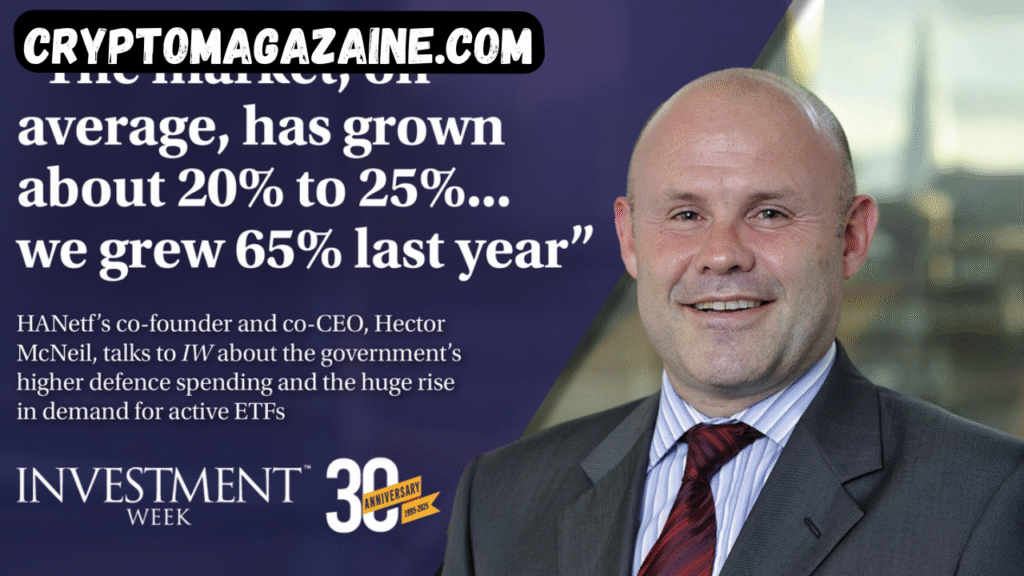
Few figures in modern finance have had a front-row seat to as many paradigm shifts as Hector McNeil, co-founder and co-CEO of HANetf. From the earliest days of exchange-traded funds (ETFs) — when the concept was little more than a niche experiment — to the dawn of regulated crypto products, McNeil has been at the forefront of one of the greatest democratizations in investment history.
“I started my ETF career at Susquehanna,” McNeil recalls. “Back then, ETFs were barely known outside the U.S., and in Europe, they were almost non-existent. It was all new territory.”
That early exposure to a frontier product would shape his entire career — one devoted to tearing down the walls that kept ordinary investors locked out of sophisticated asset classes.
From Gold Bars to Blockchain The Rise of a Disruptor
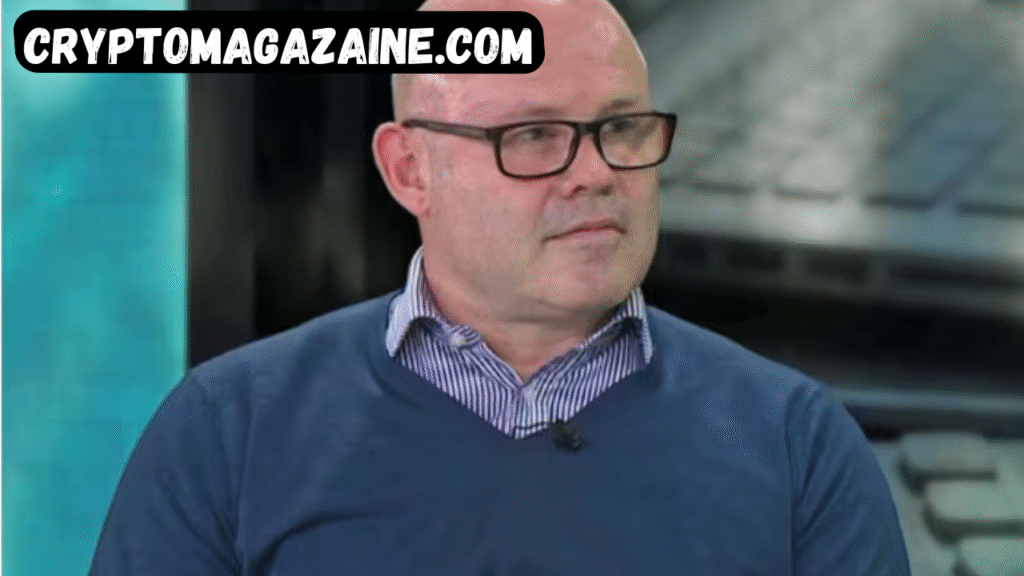
McNeil’s reputation as a pioneer was cemented during his time at ETF Securities, where he helped launch the world’s first gold ETF in Australia and its European counterpart, Gold Bullion Securities, in 2004.
At the time, gold trading was largely restricted to institutions and high-net-worth investors who could access physical bullion or complex derivatives. The ETF model transformed that dynamic overnight.
“The gold price was about $418 an ounce when we launched,” McNeil says with a grin. “It’s gone up tenfold since. In a way, that’s a nice parallel for crypto — another asset class people once dismissed as too volatile or niche.”
To McNeil, the connection between gold ETFs in 2004 and crypto ETPs today is more than coincidental — it’s a pattern. Both represent moments when technology and regulation converge to make previously inaccessible markets open to everyone.
“ETFs have always been about democratizing access,” he says. “What gold was to institutions twenty years ago, crypto is to retail investors today.”
Breaking Down Barriers The Birth of HANetf
By 2017, McNeil and long-time partner Nik Bienkowski recognized another gap in the market: smaller asset managers who wanted to launch ETFs but lacked the scale, infrastructure, or regulatory muscle of industry titans like BlackRock, Vanguard, or Invesco.
Their solution was HANetf, Europe’s first fully independent white-label ETF platform — an end-to-end service allowing asset managers to bring ETFs to market in as little as ten weeks.
“We wanted to shatter the myth that only the giants could issue ETFs,” McNeil explains. “HANetf handles everything — regulation, listing, compliance, marketing, distribution. Our partners just need a great investment idea.”
This plug-and-play model gave birth to a new generation of ETF issuers. Boutique managers, thematic specialists, and even content brands could now offer their own ETFs to global investors.
“When we sign a new client, they often say, ‘It’s the first time my mum can buy our product,’” McNeil smiles. “She can go online, buy a single share, and suddenly she’s invested in something that used to be reserved for hedge funds or private offices.”
Today, HANetf supports over 32 brands, accounting for a significant slice of Europe’s 145 total ETF issuers — a staggering achievement in an industry once dominated by a handful of legacy firms.
“In the U.S., there are about 600 ETF brands,” he notes. “Europe will follow that trajectory — and HANetf will be right at the heart of that expansion.”
Crypto and the Regulatory Reckoning
The next major inflection point for HANetf — and for McNeil personally — is crypto.
For years, regulators across Europe, especially in the UK, resisted allowing crypto exchange-traded products (ETPs) for retail investors. But in 2025, after intense debate and evolving global standards, the Financial Conduct Authority (FCA) finally reversed its ban, paving the way for crypto ETPs to trade on regulated exchanges.
McNeil is blunt about what he calls a “missed opportunity.”
“It was a bit of an own goal,” he says. “The ban didn’t stop people from accessing crypto. It just pushed them onto unregulated platforms with no investor protections.”
He argues that regulated crypto products represent progress, not peril.
“From a regulator’s perspective, it’s far safer when investors use a regulated broker, on a regulated exchange, buying a regulated product. There are guardrails — liquidity requirements, transparency, pricing. That’s how you protect people.”
McNeil’s vision is simple: a world where crypto, commodities, equities, and even carbon credits can all sit side by side in the same brokerage account — easily traded, transparent, and safe.
“If I were a regulator, I’d much rather have Mrs. McNeil trading crypto on Hargreaves Lansdown than sending her money to some offshore exchange in Kazakhstan,” he jokes.
A Strategic Partner Citi’s Stake in HANetf
In July 2025, HANetf reached another milestone when Citigroup took a minority stake in the company — a move that underscored the firm’s credibility and growth trajectory.
“Citi are actually launching their own white-label platform,” McNeil reveals. “So technically, they’re a competitor. But at the same time, we’re partnering with them on capital markets and operational services. It’s a strategic alliance more than anything.”
Far from being a cash grab, McNeil says the deal was about validation.
“We didn’t need the money — we’re profitable. But when a global institution like Citi does deep due diligence and still decides to invest, that sends a powerful signal to our clients. It’s like getting a gold star from one of the world’s biggest banks.”
The Future of ETFs From YouTubers to Pension Funds

As McNeil looks ahead, his optimism for Europe’s ETF market is unshakable. The U.S. market — now home to more than 3,000 ETFs — has seen an explosion of innovation, with everyone from The Motley Fool to social media influencers launching their own funds.
“It’s happening in the States already,” he says. “You’ve got ETFs from YouTubers, pension funds, wealth managers — even fintech apps. Europe will follow the same curve, just with a few years’ lag.”
The key, McNeil believes, lies in access and trust. As investors grow more comfortable with self-directed trading platforms, they will demand new, differentiated products that reflect their personal interests — whether that’s clean energy, blockchain, or space exploration.
“The beauty of ETFs,” he says, “is that they make the exotic feel ordinary. They let anyone, anywhere, invest in almost anything — safely, transparently, and affordably.”
A Lifelong Evangelist for ETFs
Despite his success, McNeil’s enthusiasm for the industry remains almost childlike.
“I’m an ETF moonie,” he laughs. “I just love this industry. Every year there’s something new — a new theme, a new idea, a new frontier.”
For him, ETFs are more than just financial instruments. They are symbols of empowerment — proof that innovation can open the doors of high finance to everyday people.
“We’ve gone from gold bars to Bitcoin, from hedge funds to YouTubers. And it’s all powered by the same simple idea: access. That’s what drives me. That’s what HANetf is about.”
As the lines between traditional and digital finance blur, and as regulators learn to embrace innovation rather than fear it, McNeil’s vision of a truly democratized investment world feels closer than ever.
“We’re only just getting started,” he says with a grin. “The next decade for ETFs — and for investors — is going to be out of this world.”
Read More: Canary Funds Set to Launch First U.S. Spot XRP ETF A Landmark Moment for Ripple and the Crypto Marke