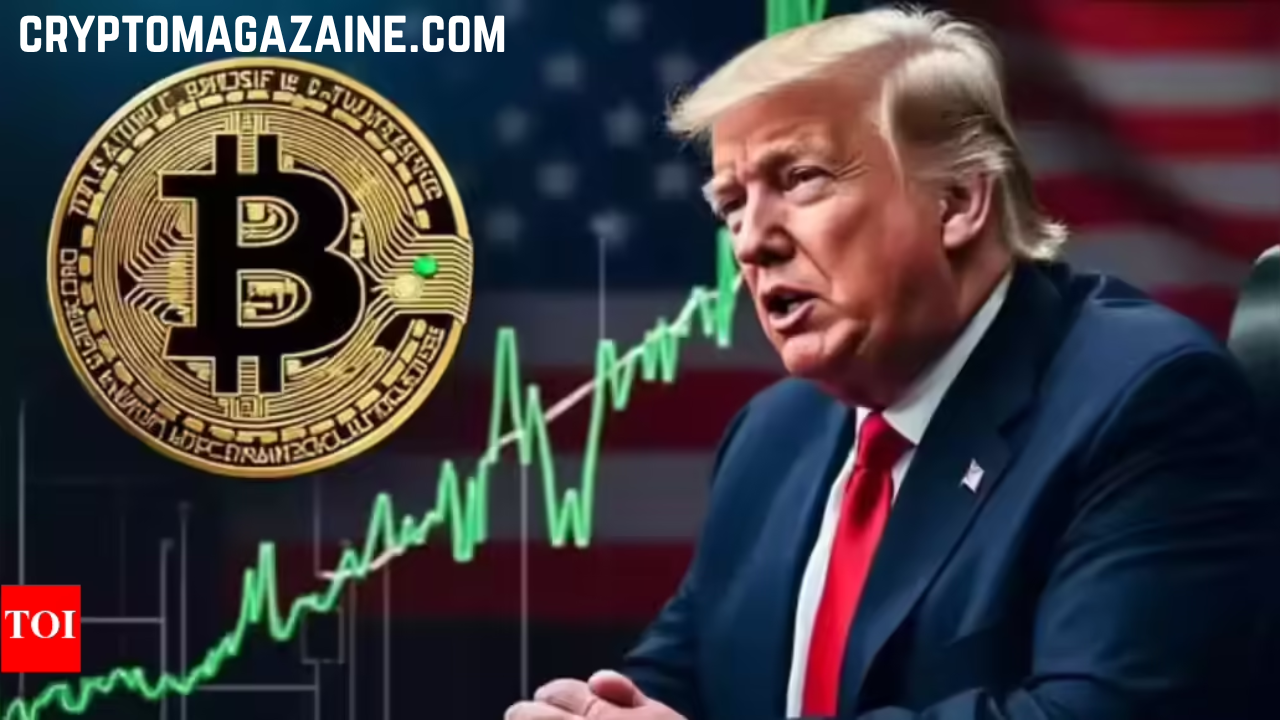
In a powerful speech at the America Business Forum in Miami, Florida, President Donald J. Trump announced an ambitious vision for the United States to become “the Bitcoin superpower” and “the crypto capital of the world.” His remarks, delivered to a packed audience of entrepreneurs and investors, signaled a dramatic pivot toward cryptocurrency innovation and national leadership. Trump positioned his administration as the force that ended what he described as a federal “war on crypto,” arguing that embracing digital assets is essential for maintaining U.S. financial dominance and countering rising competitors such as China.
At 1 p.m. ET on Wednesday, the President outlined a future where the United States would no longer view cryptocurrency as a threat but as a strategic advantage. While Trump’s remarks included few new policy details, they painted a clear picture of a government ready to harness the power of blockchain, Bitcoin, and decentralized innovation.
Trump Declares We Ended the War on Crypto
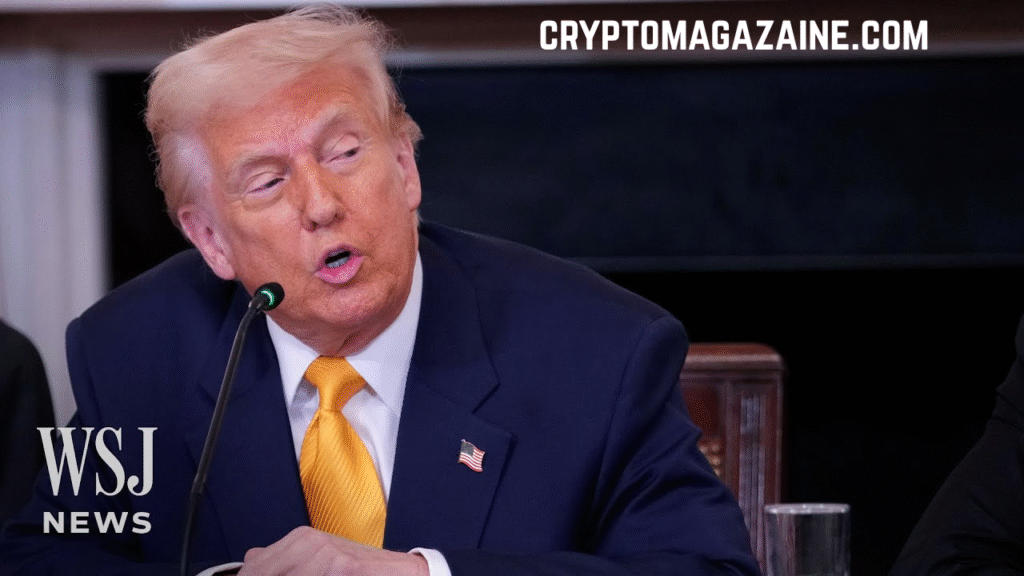
Trump began his speech by drawing a sharp contrast between his administration and the previous one. He claimed that under his leadership, the U.S. government had ended a “war on crypto” that had stifled innovation and discouraged investment.
“I’ve also signed historic executive orders to end the federal government’s war on crypto,” Trump said. “Crypto was under siege. It’s not under siege anymore.”
According to the President, the prior administration had imposed regulatory obstacles and criminal investigations that pushed U.S. crypto firms overseas. Trump described this as a “vicious” approach that damaged America’s competitiveness in emerging technologies. He portrayed his executive actions as liberating the crypto sector from regulatory hostility, allowing entrepreneurs and innovators to flourish in a more open environment.
While Trump did not offer new executive timelines or specific directives for federal agencies, his speech reaffirmed his administration’s intent to position the U.S. as a welcoming home for blockchain startups, Bitcoin mining, and digital asset development.
The Economic Argument Crypto as a Support for the U.S. Dollar
One of the most striking moments in Trump’s Miami address was his defense of cryptocurrency as a complement, rather than a rival, to the U.S. dollar.
“It takes a lot of the pressure off the dollar,” Trump said. “It does a lot of good things, but we’re into it.”
This perspective contrasts with traditional views that see crypto as a competitor to fiat currencies. Trump suggested that integrating crypto into the broader U.S. financial ecosystem could strengthen the dollar’s global position, not weaken it. By encouraging domestic crypto innovation, he argued, the United States could maintain financial leadership while ensuring that blockchain technologies operate under American influence and standards.
Trump’s comments align with recent policy shifts from his administration, which have emphasized synergy between traditional finance and decentralized technology, rather than direct competition.
Building a Crypto-Backed Future Strategic Bitcoin Reserve and Digital Asset Stockpile
While Trump’s Miami remarks focused more on rhetoric than policy, they reinforced several initiatives already underway. In 2025, the White House authorized the creation of a Strategic Bitcoin Reserve and a U.S. Digital Asset Stockpile, using cryptocurrency assets obtained through federal seizures and forfeitures.
This move was designed to ensure that the federal government maintains a tangible stake in the evolving crypto economy. The administration clarified that the reserve did not involve new Bitcoin purchases but rather the management of existing digital assets under federal control.
These actions, along with the GENIUS Act—a stablecoin regulatory framework signed into law on July 18—have positioned the U.S. to play a leading role in shaping global crypto policy. The GENIUS Act provides guidelines for dollar-backed stablecoins, aiming to ensure stability, transparency, and consumer protection while preventing foreign digital currencies from dominating the global payments landscape.
Rejecting a Central Bank Digital Currency (CBDC)

One of the cornerstones of Trump’s crypto stance has been his rejection of a U.S. central bank digital currency (CBDC). His administration argues that such a system would centralize too much financial power in the hands of the government and undermine personal financial freedom.
Instead, Trump’s team promotes a vision where private crypto innovation and market competition drive progress, underpinned by regulatory clarity rather than centralized control.
This approach has drawn sharp distinctions between the U.S. and China, where the government’s digital yuan project represents the opposite model: a tightly controlled, state-issued digital currency that gives regulators real-time oversight of transactions. Trump emphasized that this contrast highlights why America must lead in crypto innovation to defend both economic freedom and dollar primacy.
The Global Competition China Wants to Do It
Throughout his Miami speech, Trump warned about the geopolitical stakes of cryptocurrency leadership. He repeatedly referenced China, describing it as the main global competitor in digital finance.
“And don’t forget, if we don’t do the crypto properly, China … China wants to do it. They’re starting it, but they want to do it. Other countries want to do it. If we don’t do it properly — it’s a big industry.”
Trump’s comments underscored a broader narrative: cryptocurrency is not merely a financial issue, but a matter of national strategy. He suggested that if the United States fails to lead, rival powers could dominate blockchain innovation, digital payments, and the next generation of global finance.
By tying crypto to national security and economic independence, Trump framed his policy as both pro-business and patriotic—a rallying call for American entrepreneurs to ensure that innovation happens on U.S. soil, not abroad.
Crypto and AI America’s Twin Technological Frontiers
In his remarks, Trump connected cryptocurrency to another key area of technological competition: artificial intelligence (AI).
“We’re making the United States the Bitcoin superpower, the crypto capital of the world,” he said. “We’re also the undisputed leader in artificial intelligence.”
By pairing crypto with AI, Trump emphasized the synergy between decentralized finance and intelligent computing. His administration views both as essential drivers of future economic growth, innovation, and job creation. This framing signals that Washington’s new crypto stance is part of a broader technology strategy aimed at securing long-term dominance in high-tech industries.
Business Support and Industry Backing
Trump also highlighted the growing influence of crypto-friendly business leaders and entrepreneurs.
“Because it’s a big industry,” he said. “I have a lot of people that are great people, great business people. They’re in other businesses, but they’re in crypto too.”
By referencing a network of business allies, Trump sought to position crypto as a mainstream economic force supported by America’s leading investors and innovators. His remarks resonated with the Miami audience, which included major figures from both traditional finance and the blockchain sector.
Miami itself has emerged as a hub for crypto activity in recent years, making it a fitting backdrop for Trump’s declaration of national leadership in the digital asset economy.
Conclusion The U.S. Crypto Dream and the Path Ahead
President Trump’s Miami address marked a defining moment for the global conversation about cryptocurrency. His call to make the United States “the Bitcoin superpower” was more than a slogan—it was a policy vision rooted in economic competitiveness, technological innovation, and national pride.
While his speech offered few concrete policy changes or agency directives, the symbolism was powerful. Trump’s administration has aligned itself with crypto-friendly regulation, private-sector innovation, and strategic national engagement in blockchain technology.
As the global race for digital financial dominance accelerates—with China, Europe, and other regions advancing their own crypto frameworks—the United States now faces a critical choice. Will it lead through open innovation and market freedom, as Trump envisions, or risk falling behind in one of the most transformative economic revolutions of the century?
For now, Trump’s message is clear: the age of American crypto leadership has begun, and the White House intends to make the U.S. the crypto capital of the world—a Bitcoin superpower prepared to shape the future of global finance.
Read More: Elon Musk Revives Dogecoin Hype Train One Big Player Quietly Loads Up on a Spin Off Coin