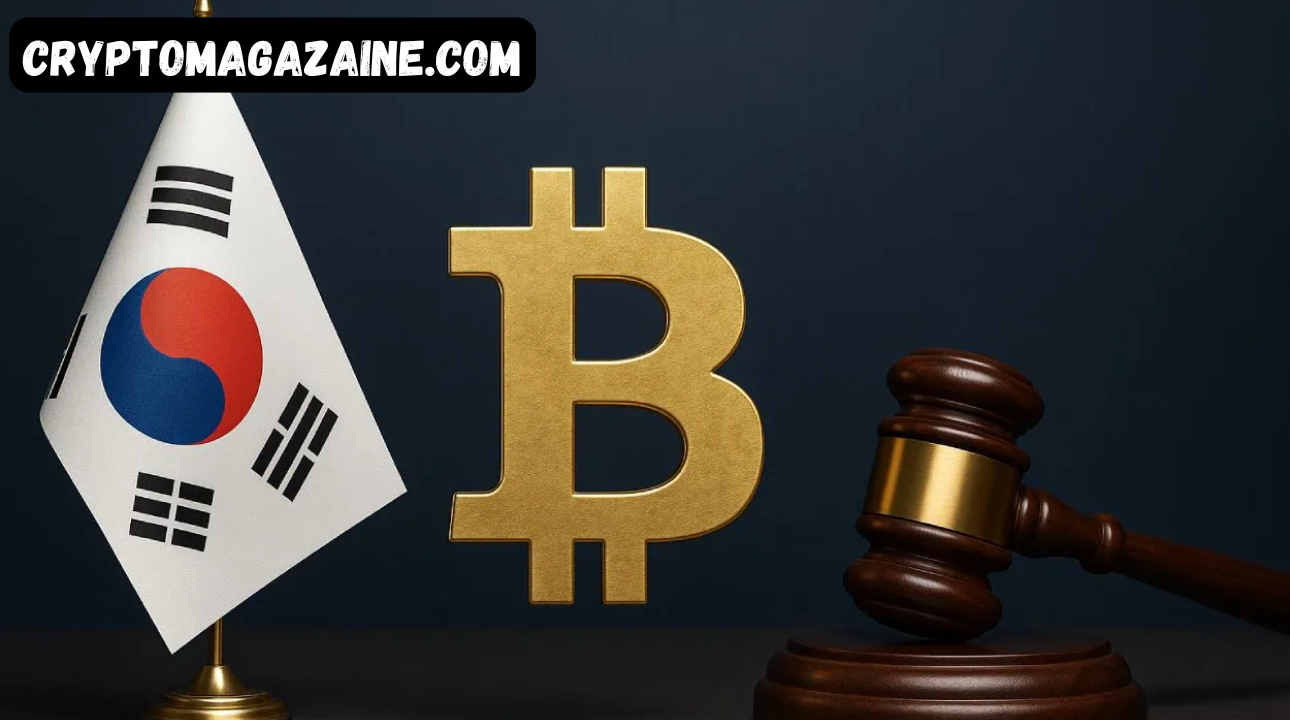
South Korea is preparing one of its most significant regulatory shifts in crypto history as it moves to impose bank-level liability standards on digital asset exchanges. This push comes directly after the high-profile Upbit $30.1 million hack, which exposed deep flaws in current security laws and revealed that exchanges are not held accountable in the same way traditional financial institutions are.
Lawmakers and regulators now aim to transform how the digital asset industry operates in the country, making crypto exchanges financially responsible for user losses caused by hacking incidents or system failures regardless of fault, similar to banks. This new direction represents a major turning point in South Korea’s approach to crypto governance.
The following in-depth, long-form article examines the new liability standards, the Upbit hack controversy, the rise in system failures, anti-money laundering crackdowns, upcoming legislation, tax delays, and the future of digital asset regulation in Korea.
Why Korea Plans to Treat Crypto Exchanges Like Banks
For years, South Korea has been considered one of the most active and influential cryptocurrency markets in the world. However, the rapid expansion of local exchanges exposed major gaps in financial security, legal accountability, and consumer protection frameworks.
The Upbit hack became a wake-up call.
Regulators realized that exchanges were operating with fewer responsibilities and lower liability standards compared to banks, even though they handle massive volumes of user funds. Under current laws, exchanges are not required to compensate customers for hack-related losses unless fault is proven.
This lack of strict liability created:
- An inability to enforce compensation
- Weak penalties for security failures
- Slow reporting practices
- Rising public concerns
By applying bank-level standards, the government aims to force exchanges to invest in security infrastructure, improve internal controls, and take financial responsibility for incidents.
The Upbit Hack That Triggered Regulatory Reform
The turning point was the November 27 breach, which allowed attackers to transfer:
- 104 billion won worth of Solana-based tokens
- Equivalent to $30.1–$36 million
- Executed in a rapid 54-minute window
Security vulnerabilities enabled the unauthorized transactions, yet Upbit faced minimal penalties because existing laws do not require exchanges to repay users or face strict sanctions.
What shocked regulators further was the reporting delay:
- Hack detected at 5:00 a.m.
- Upbit reported the incident to authorities only at 10:58 a.m.
- The delay coincided with Dunamu’s scheduled merger with Naver Financial concluding at 10:50 a.m.
Lawmakers accused the company of withholding information for corporate convenience rather than public and regulatory safety. This controversy intensified demands for structural reform.
Mounting System Failures Across Korean Crypto Exchanges
The Upbit case is only part of a much larger problem.
Financial Supervisory Service (FSS) data revealed that major Korean exchanges suffered 20 system failures from 2023 to September 2024.
The five major platforms involved were:
- Upbit
- Bithumb
- Coinone
- Korbit
- Gopax
Effects of these failures included:
- Over 900 user accounts affected
- 5 billion won in combined losses
- Upbit alone had six failures, causing 3 billion won in user damages
These repeated breakdowns highlighted the fragility of crypto trading systems, the inadequate technical infrastructure, and the need for stronger IT security requirements.
New Liability Standards for Crypto Exchanges in Korea

The Financial Services Commission (FSC) is now drafting laws that would subject exchanges to the same liability responsibilities as banks and electronic payment firms.
Key components of the upcoming reforms include:
Mandatory User Compensation
Exchanges must compensate users for losses caused by:
- Hacking
- System failures
- Technical outages
- Internal security lapses
Compensation must be paid regardless of fault, similar to how banks must repay customers for unauthorized financial transactions.
Mandatory Security Infrastructure Plans
All licensed platforms will be required to maintain:
- Upgraded IT systems
- Regular security audits
- Real-time monitoring tools
- Incident response protocols
- Robust internal risk management frameworks
Stronger Penalties and Revenue-Based Fines
The FSC may introduce fines of up to 3% of annual revenue for hacking incidents, replacing the current 5 billion won cap, which regulators consider too small for large corporations.
The result will be a shift from small fixed penalties to high-impact revenue-based punishment, matching standards used in traditional finance.
Anti-Money Laundering Crackdown Expands Nationwide
The crackdown is not limited to security breaches. Korea’s Financial Intelligence Unit (FIU) has started tightening anti-money laundering (AML) enforcement across the entire industry.
Recent actions include:
On-Site Inspections
FIU teams inspected major exchanges for:
- KYC (Know Your Customer) compliance
- Suspicious transaction reporting
- Travel Rule implementation
- Transaction monitoring accuracy
Major Penalties Already Issued
Dunamu, the operator of Upbit, received:
- A three-month suspension on onboarding new customers
- A 35.2 billion won fine
This sets a precedent for other exchanges, with penalties expected to reach hundreds of billions of won across the industry.
Expansion of Korea’s Crypto Travel Rule
Another significant change is the expansion of the Travel Rule.
Previously, identity verification only applied to large transactions over 1 million won. Users could avoid regulation by splitting transfers into smaller amounts.
Now, Korea will:
- Apply the Travel Rule to all transactions under 1 million won
- Close loopholes used to avoid verification
- Require strict identification for even small transfers
FIU Chairman Lee Eok-won confirmed the policy shift during a National Assembly briefing, emphasizing a zero-tolerance stance toward money laundering.
New Restrictions on Ownership and Internal Governance

Upcoming reforms will also change who is allowed to hold major stakes in licensed crypto platforms.
Individuals with:
- Tax evasion convictions
- Drug-related offenses
- Serious financial crimes
…will be prohibited from becoming major shareholders in crypto exchanges.
This mirrors restrictions used in the banking sector, reflecting growing alignment between digital asset rules and traditional finance standards.
FIU will also gain pre-emptive account-freezing powers in high-risk AML situations, giving regulators more direct control during investigations.
Longer-Term Legislative Timeline and Coordination With FATF
Many of the proposed amendments are expected to be finalized in the first half of 2026. Korea is actively aligning these reforms with global digital asset standards set by the Financial Action Task Force (FATF).
The new laws aim to:
- Ensure Korea remains competitive internationally
- Strengthen consumer protection
- Reduce exchange vulnerabilities
- Improve cross-border AML cooperation
Crypto Taxation Delays and Stablecoin Regulatory Push
Despite rapid progress in security and AML reforms, South Korea’s crypto tax system continues to face uncertainty.
The tax regime, originally scheduled for January 2022 and repeatedly delayed, is now slated for:
- January 2027, but could face further postponement
- Due to insufficient technical infrastructure and reporting tools
Additionally, lawmakers are pressuring the government to deliver a stablecoin regulatory framework by December 10.
Debates center on whether:
- Banks should be the primary stablecoin issuers
- Fintech firms should be permitted to participate
- A hybrid model would best support innovation and consumer safety
This framework will determine how stablecoins are issued, backed, audited, and monitored within Korea.
Conclusion A New Era for Korean Crypto Regulation
South Korea’s move to treat crypto exchanges like banks marks one of the most comprehensive shifts in digital asset regulation globally. The Upbit hack revealed major weaknesses in legal accountability, reporting standards, and system integrity. As a result, Korea is now implementing reforms that will:
- Mandate user compensation
- Enforce revenue-based penalties
- Strengthen IT security systems
- Expand AML obligations
- Tighten ownership restrictions
- Increase travel rule coverage
- Improve reporting and oversight
- Align with international standards
These sweeping measures reflect Korea’s determination to restore trust in its crypto markets and ensure that exchanges operate with the same seriousness, transparency, and accountability as traditional financial institutions.