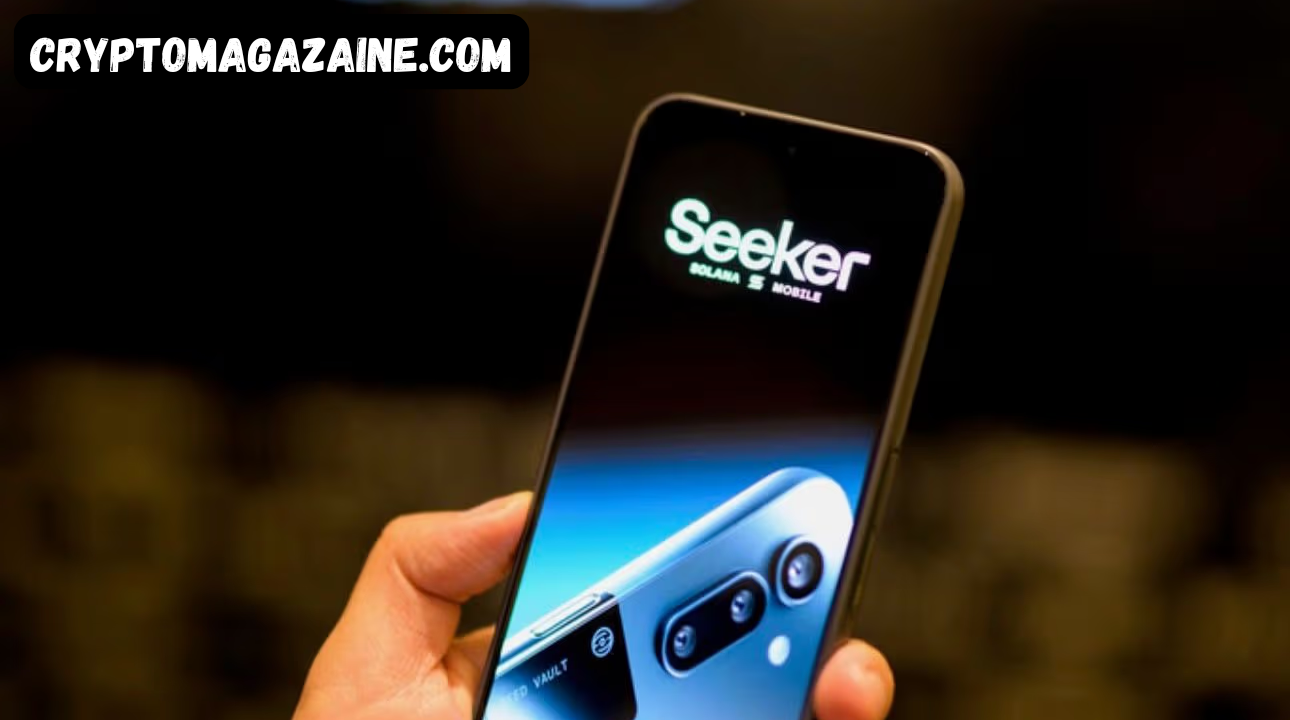
A major security shock has hit the crypto-mobile world as Ledger researchers uncovered a permanent and unfixable hardware flaw inside the MediaTek Dimensity 7300 chip — the same core processor powering the Solana Seeker smartphone. This revelation has sent ripples across the crypto community, raising urgent questions about device safety, private key protection, and future risk management for users who rely on mobile hardware as their gateway into Web3.
In this comprehensive article, we break down everything you need to know: the nature of the vulnerability, how the attack works, the impact on Solana Seeker users, MediaTek’s response, Ledger’s findings, and the surprising timing of Solana Mobile’s newly announced SKR governance token coming in 2026.
Solana Seeker Chip Hit by Unfixable Hardware Vulnerability
Ledger’s security team revealed that the MediaTek Dimensity 7300 chip — used in the Solana Seeker and several other modern smartphones — contains a fundamental silicon flaw that cannot be patched. Since the vulnerability originates in the hardware itself, no firmware update, no OS patch, and no over-the-air fix can resolve the issue.
This places affected devices in a state of permanent exposure, especially for users who store digital assets, cryptographic keys, or Web3 credentials on their phones.
According to Ledger researchers Charles Christen and Léo Benito, the flaw allows attackers with physical access to a device to bypass memory protections, break internal security boundaries, and ultimately take complete control of the handset.
This means:
- Private keys can be extracted
- Device security features can be overwritten
- System integrity checks can be bypassed
- Stored crypto, identity data, and authentication keys can be stolen
Ledger summarized the outcome in one stark phrase: “total compromise.”
How Ledger Broke the Device The Boot-Phase Fault Injection Attack
The Dimensity 7300 vulnerability is exploited during the earliest stages of the phone’s boot sequence — a moment where the system is expected to be most secure. By injecting electromagnetic faults at precisely the right moment, Ledger’s team disrupted the chip’s security enforcement routines.
During this brief and delicate window:
- The chip attempts to verify memory integrity
- Security locks are applied
- System protections are initialized
If an attacker interferes in this moment, they can cause the processor to skip crucial protection steps, leaving the system effectively naked.
This technique is known as electromagnetic fault injection (EMFI), and while highly technical, Ledger proved it is both feasible and repeatable.
A Small Chance But a Fast One Attack Success Rates Explained
Ledger’s tests revealed that a single attempt has only a 0.1% to 1% success rate. However, the attack can be executed dozens of times per minute.
With enough rapid retries, the chipset eventually collapses under the fault attack.
Ledger estimates that attackers can achieve full compromise in several minutes, especially if they have uninterrupted physical access to the device.
This transforms the vulnerability from a theoretical research concern into a practical, real-world threat.
Why the Security Flaw Cannot Be Fixed
Most cybersecurity vulnerabilities are patched through software updates — but not this one.
Since the weakness is etched into the silicon during fabrication, the entire hardware line is permanently affected, including all:
- Current Solana Seeker phones
- Future devices using the Dimensity 7300
- Other smartphone models built on the same chip
Even if vendors roll out security updates, the flaw remains active. Ledger emphasized that “users remain exposed even after disclosure.”
This has major implications for crypto users who rely on mobile devices to secure private keys, seed phrases, or wallets.
MediaTek Responds Not Designed for Financial-Grade Security
MediaTek’s official response acknowledged the flaw but emphasized that the Dimensity 7300 was never intended for environments requiring high-security hardware modules.
In essence, MediaTek stated:
- The chip is for consumer smartphones
- It is not a hardware security module
- Manufacturers should add extra protection if they expect financial-grade safety
In other words, Solana Seeker vendors should not have relied solely on this chip for protecting sensitive cryptographic material.
Solana Mobile Next Big Move The SKR Governance Token Coming in 2026
Coinciding with the chip vulnerability news, Solana Mobile confirmed plans to launch SKR, the official governance token for the Solana Seeker ecosystem, starting in early 2026.
This token aims to give Seeker owners a stake in:
- Platform governance
- Mobile ecosystem decisions
- Feature development
- Community growth
SKR Token Allocation Breakdown
Total supply: 10 billion SKR
- 30% — Airdrops
- 25% — Growth and partnerships
- 10% — Liquidity
- 10% — Community treasury
- 15% — Solana Mobile
- 10% — Solana Labs
The token will also feature linear inflation, rewarding early stakers and long-term ecosystem participants.
More information is expected at the Solana Breakpoint Conference from Dec. 11–13.
What This Means for Solana Seeker Users
The discovery of a permanent, hardware-level exploit creates a complex dilemma for Seeker owners.
Key Risks
- Private keys stored on the device may be vulnerable
- Seed phrases saved locally can be extracted
- Attackers need only brief physical access
- No future update can fully remove the risk
Practical Safety Recommendations
Until Solana Mobile issues new guidance, Ledger strongly recommends:
- Do not store private keys directly on affected devices
- Prefer hardware wallets for crypto storage
- Avoid using the device to generate or store seed phrases
- Assume that physical access equals full compromise
For crypto users, this vulnerability serves as an important reminder: mobile phones are not hardware wallets.
Final Thoughts
The Solana Seeker’s unfixable hardware flaw represents one of the most significant smartphone security revelations in recent crypto history. By exposing a vulnerability etched directly into the MediaTek Dimensity 7300 chip, Ledger has highlighted the risks of relying on consumer-grade hardware for safeguarding digital assets.
At the same time, Solana Mobile’s upcoming SKR governance token adds a new layer of intrigue, arriving at a moment when concerns about device security are at their highest.
As the crypto-mobile ecosystem continues to evolve, secure hardware — not just secure software — will increasingly determine the safety of users’ assets and identities.