Uzbekistan is preparing to take one of the most significant regulatory steps in its digital-asset history, unveiling a comprehensive framework that will legalize the use of stablecoins in payments and allow the issuance and trading of tokenized securities beginning in 2026. The ambitious overhaul signals a strategic push by the Central Asian nation to build one of the region’s most structured and tightly supervised digital-asset environments.
The reform comes as Central Asia increasingly distinguishes itself as a fast-moving region for regulated crypto adoption. Just months after Turkmenistan announced its own plans for crypto legalization, Uzbekistan is positioning itself at the center of this accelerating regional trend—one focused not on unregulated expansion, but on uniform rules, supervision, and the integration of blockchain technology into formal financial systems.
A New Era Begins January 1, 2026: Stablecoins Enter the Legal Payment System
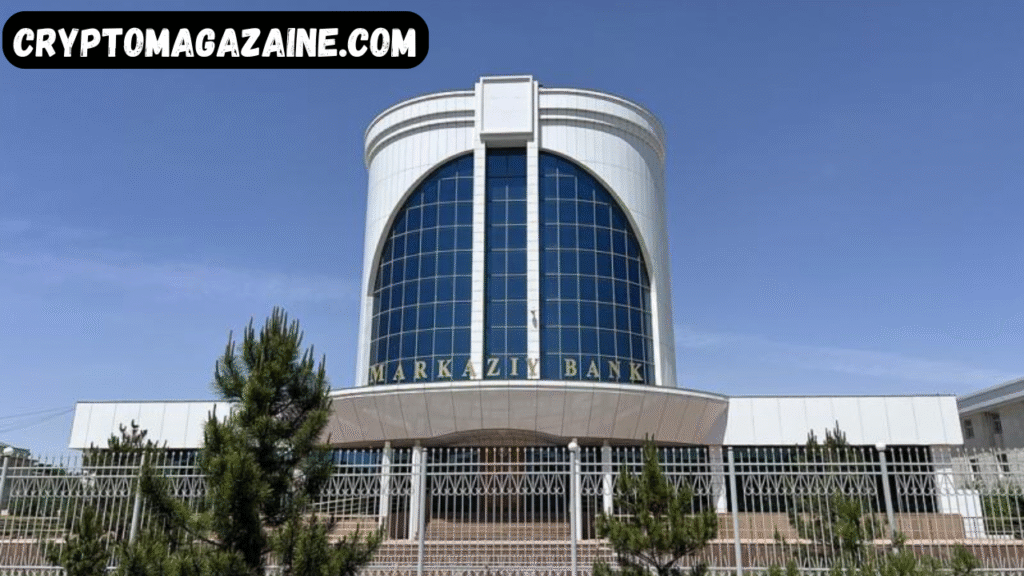
According to a Friday report from the Uzbek news outlet Kun, the country will introduce a special legal regime on January 1, 2026, forming a new nationwide regulatory sandbox. The initiative will be administered by the National Agency for Perspective Projects (NAPP) in partnership with the Central Bank of Uzbekistan, two institutions that have been central to the country’s gradual shift from strict crypto restrictions to controlled digital-asset experimentation.
Inside this sandbox, stablecoins will be tested directly as a means of payment, marking the first time Uzbekistan formally allows a category of digital assets to function in its payment ecosystem. Authorities will tightly monitor every element of this experiment—including market behavior, potential monetary risks, user safeguards, and the technical architecture of blockchain payments.
The sandbox will also support:
- Pilot distributed-ledger-based payment systems
- Risk-controlled use of stablecoins in retail and institutional transactions
- Development of a regulated tokenized-securities marketplace
This gradual, monitored approach reflects the government’s insistence on prioritizing financial stability over rapid adoption, despite growing public and institutional demand for digital-asset services.
Tokenized Stocks and Bonds Approved for 2026 Licensed Exchanges Prepare New Trading Platforms
Starting on January 1, 2026, the same day the sandbox launches, legal entities registered in Uzbekistan will be permitted to issue tokenized stocks, bonds, and other securities. This marks a major structural shift for the country’s capital markets.
Under the new rules:
- Only licensed entities will be allowed to issue tokenized financial instruments.
- Uzbekistan’s regulated stock exchanges will create dedicated digital-assets trading platforms.
- The entire issuance and trading process will operate under strict government oversight.
The move lays the groundwork for a hybrid financial system in which traditional instruments and blockchain-based securities operate side by side.
This transformation follows months of internal review. Earlier, in September, the central bank chairman Timur Ishmetov signaled that stablecoins could be authorized for payments, but only with rigorous regulatory control to prevent disruptions to monetary policy. He also reiterated that public expectations for digital currencies often exceed their practical value in advanced payment ecosystems.
Still, Ishmetov confirmed that Uzbekistan will continue exploring blockchain models, including a wholesale central bank digital currency (CBDC) aimed at accelerating interbank settlements—an important contrast to retail CBDCs intended for the general population.
A Strict Regulatory Background From Earlier Bans to Today’s Controlled System

Uzbekistan’s shift toward a structured digital-asset framework builds on its existing crypto regulations, which since January 2023 have required:
- All crypto transactions by residents to be processed only through locally licensed crypto asset service providers
- A complete ban on anonymous transactions
- A prohibition on using foreign cryptocurrency exchanges
- Mandatory identity verification for all customers
- A requirement that licensed providers store transaction data for at least five years
Despite the increasing openness to digital-asset integration, crypto remains legally classified as an asset, not a currency. With the new policy, stablecoins will become the first digital asset category allowed specifically for payment use, though only within the controlled sandbox model.
Mining remains legal but strictly regulated. Operators must:
- Register with state authorities
- Rely exclusively on solar energy
- Comply with technical standards and environmental guidelines
Industry Costs and Compliance Pressure Intensify
The shift toward legalization has not been paired with looser enforcement. In March 2024, Uzbekistan doubled monthly licensing fees for crypto exchanges to approximately $20,000, reinforcing its commitment to a tightly controlled digital-asset market.
Even with these restrictions, crypto adoption in the country has grown substantially:
- Nearly 1.5% of Uzbekistan’s population held cryptocurrency in 2024.
- Licensed domestic providers processed over $1 billion in on-chain transactions.
- Uzbekistan ranked 33rd globally in crypto adoption, leading Central Asia alongside Kazakhstan and Kyrgyzstan.
This growth occurred against the backdrop of increasingly sophisticated regulations across the region, as governments attempt to capture blockchain innovation without allowing uncontrolled financial risk.
Global Context Stablecoin Regulations Strengthen Worldwide

Uzbekistan’s decision arrives during a pivotal moment for global stablecoin governance.
Throughout 2025, major jurisdictions advanced comprehensive frameworks:
- The European Union began full implementation of the MiCA regulatory regime.
- The United States progressed federal stablecoin legislation through the GENIUS Act.
- Hong Kong and the UAE launched issuer-licensing models that bring stablecoin operations under direct state supervision.
- Canada proposed a national Stablecoin Act.
- South Africa, Kenya, and Brazil moved forward with regulated systems for stablecoin payments and cross-border settlement.
Worldwide, stablecoins have become a central pillar of digital payments, with blockchain networks regularly processing higher on-chain settlement volumes than major card networks.
The industry also saw a major consolidation effort with the formation of the Blockchain Payments Consortium, led by Fireblocks, Polygon Labs, Mysten Labs, Solana Foundation, TON Foundation, Stellar Development Foundation, and Monad Foundation. The consortium aims to create global standards for how digital assets are transferred across networks—an effort that aligns with Uzbekistan’s own push toward regulated interoperability and secure payment rails.
A Turning Point for Central Asia’s Digital Future
Uzbekistan’s sweeping 2026 framework represents more than a policy update—it is a long-term blueprint for building a regulated, blockchain-enabled financial system. By legalizing stablecoin payments under strict supervision and allowing businesses to issue tokenized securities, the country is positioning itself as a regional leader in structured digital-asset experimentation.
The move also sends a clear message: the future of digital finance in Central Asia will not be driven by unregulated speculation, but by carefully monitored innovation, state oversight, and the long-term modernization of financial infrastructure.
If successfully implemented, Uzbekistan’s 2026 overhaul could become a model for emerging markets balancing innovation with monetary stability—potentially transforming both domestic payments and the country’s role in the broader global blockchain economy.
Read More: CME Blackout Traders Cry Manipulation After 10-Hour Halt Freezes Global Markets