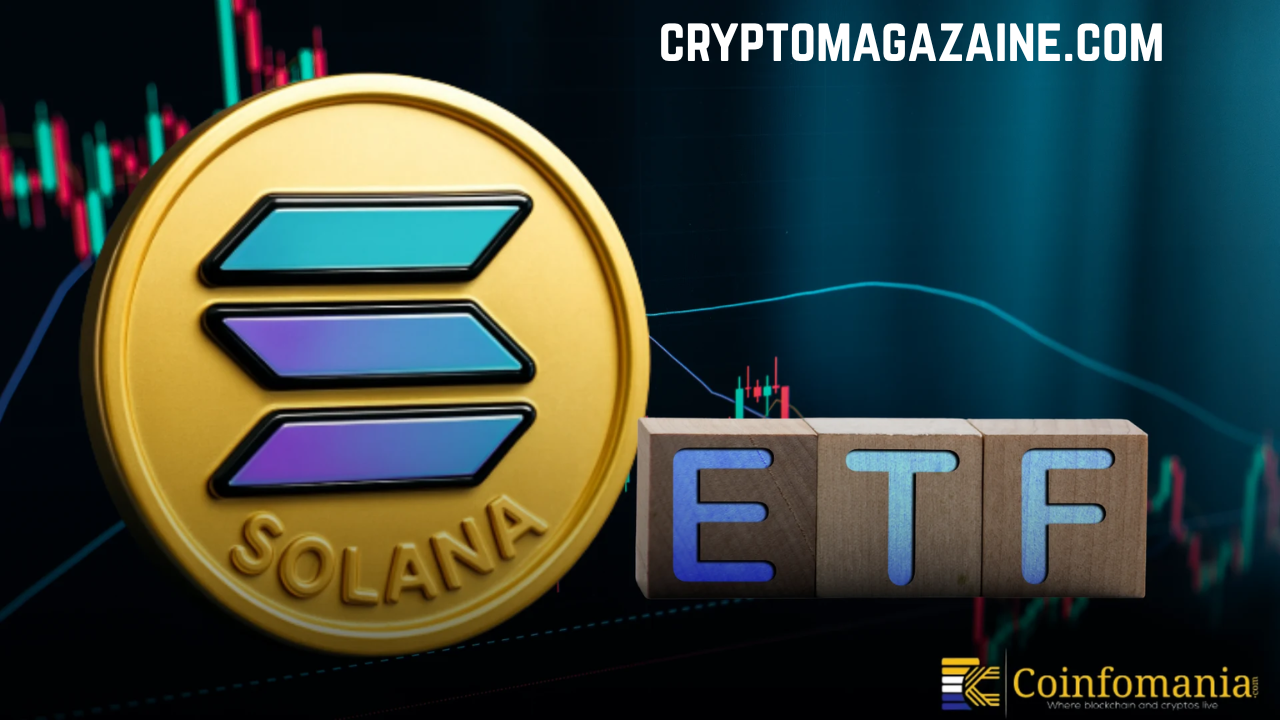
In just six trading days, investors have poured more than $280 million into newly launched U.S. Solana exchange-traded funds (ETFs), signaling a historic surge of institutional interest. Analysts now forecast that total inflows could reach as much as $5 billion within the next year as major financial players seek exposure to Solana’s ecosystem.
As Solana becomes a central asset in institutional portfolios, attention is turning toward the network’s infrastructure readiness — whether it can handle the enormous volume of high-frequency ETF transactions, retail wallet activity, and decentralized applications running simultaneously.
In response, Web3 infrastructure leader Alchemy announced that it has rebuilt its entire Solana stack from the ground up. The redesign aims to ensure that both institutional and retail users experience a seamless, stable, and ultra-fast network even under heavy loads — a move that could redefine Solana’s next stage of growth.
A Network Ready for the Next Wave
The announcement comes at a time when Solana appears to have shrugged off macroeconomic headwinds, including renewed uncertainty from the Federal Reserve. Despite officials’ warnings that December rate cuts are “not a foregone conclusion,” Solana’s ecosystem continues to draw fresh capital, with BSOL funds alone channeling $417 million into the network.
For U.S. investors, these ETFs offer regulated access to Solana’s staking yields — effectively bridging the gap between traditional finance and the emerging world of on-chain assets.
But behind this financial momentum lies a critical technical question: Can Solana’s infrastructure sustain this kind of scale?
Built for Scale and Speed
Alchemy’s engineering overhaul represents two years of deep collaboration with developers and ecosystem partners, including Bags.fm, Solflare, and Robinhood. The goal was to address long-standing pain points around data reliability, transaction latency, and developer scalability.
The result: an entirely new generation of RPC and Streaming APIs purpose-built for Solana.
These upgrades deliver:
- 20x faster archive calls
- 99.95% uptime
- Double the throughput of the previous version
Alchemy’s new Solana infrastructure also features advanced data-handling capabilities, enabling systems to process large and complex data sets with near-instant response times — a crucial advantage for high-volume use cases such as exchanges, wallets, and analytics dashboards.
This means developers and platforms can now rely on stable, real-time data access — even during peak market activity — ensuring consistent performance for millions of users simultaneously.
Solving the Chewing Glass Challenge

For years, developers have described building on Solana as “chewing glass” — a term born out of the blockchain’s unique technical complexity and performance demands. While Solana’s core protocol has matured impressively, much of the surrounding infrastructure tooling lagged behind, creating bottlenecks for teams building at scale.
Alchemy’s research uncovered recurring issues with Bigtable-based RPC systems, where developers frequently encountered:
- Missing or incomplete data records
- Query throttling
- Slow access to historical data
These inefficiencies forced teams to construct complex workarounds, increasing costs and slowing down product iteration.
Alchemy’s redesigned Solana stack eliminates these constraints entirely. It significantly accelerates heavy data methods like getTransaction and getProgramAccounts, ensuring full reliability under institutional-scale workloads.
In effect, what was once “chewing glass” for developers has now become a smooth, scalable architecture capable of supporting mainstream financial infrastructure.
Infrastructure for the Institutional Era
The timing couldn’t be more significant. With ETF adoption accelerating and even Western Union preparing to launch a stablecoin on Solana in 2026, the blockchain is entering an era where uptime, reliability, and data precision are just as critical as transaction speed.
Institutional investors — from hedge funds to asset managers — demand infrastructure that mirrors the standards of traditional finance: always-on, accurate, and auditable. Alchemy’s rebuild effectively positions Solana to meet those standards.
By reengineering Solana’s “plumbing” from the ground up, Alchemy has ensured that the network can sustain long-term, institutional-grade traffic while still supporting mass-market consumer apps.
As Solana continues to power payment platforms, on-chain analytics, and decentralized finance protocols, these improvements will be instrumental in delivering a Web3 experience as seamless as Web2.
From Chewing Glass to Powering Global Finance
Alchemy’s Solana overhaul marks a pivotal moment in the network’s evolution — transforming it from an experimental, developer-centric platform into a robust, institutional-grade financial infrastructure.
What began as a high-performance blockchain for crypto enthusiasts is now rapidly becoming the backbone of tokenized capital markets and regulated digital asset vehicles.
With ETFs driving billions in inflows and infrastructure partners like Alchemy laying the groundwork for reliability at scale, Solana is stepping confidently into its next chapter — one defined not by “chewing glass,” but by powering global finance at speed and scale.
Key Takeaway
Alchemy’s complete rebuild of its Solana infrastructure is more than an engineering milestone — it’s a signal that the Solana ecosystem is ready for institutional adoption, delivering the performance, reliability, and scale required to support billions in capital flow through ETFs, wallets, and enterprise-grade applications
Read More: OKX Launches USD Stablecoin Payments in Brazil A New Era for Saving and Spending